Wednesday, January 26, 2022

A Little Knowledge Is a Dangerous Thing 
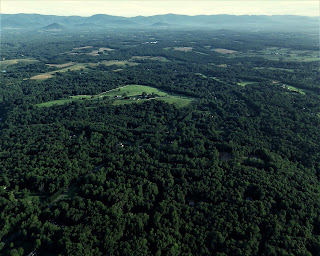
A hot-air balloon ride over the Charlottesville, Virginia, area makes clear there are plenty of native trees in long-since-developed towns and the rural landscape that surrounds them.

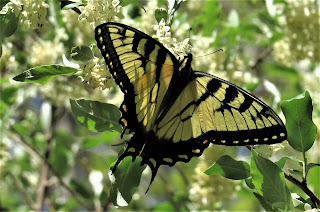
A Tiger Swallowtail is just one of many kinds of pollinators that obtain nectar from an Autumn Olive (Elaeagnus umbellata) in the author’s yard.


NOTE TO READERS: Due to conditions over which I have no control, I will, of necessity, be posting to this blog only occasionally rather than once a month. If you wish to be notified of posts as they are published, please subscribe by entering your e-mail address in the box on this page. I would appreciate your continuing interest!


ALL TEXT AND PHOTOS © Marlene A. Condon


You may be familiar with the expression, “A little knowledge is a dangerous thing.” In other words, a limited amount of information fools people into thinking that they know more about a topic than they really do, leading to errors in their judgement.


The truth of this saying is currently evident in the popular response to what has been named the Sixth Mass Extinction. "Drastically increased rates of species extinctions and declining abundances of many animal and plant populations are well documented...", according to Robert Cowie, a research professor at the University of Hawaii Manoa Pacific Biosciences Research Center.


https://www.sciencedaily.com/releases/2022/01/220113194911.htm


Cowie and his co-authors recently published a study in which they estimated that since the year 1500, Earth could already have lost between 7.5 and 13% of the two million known species on Earth, which amounts to 150,000 to 260,000 kinds of organisms. So, what has been the main response to this situation?


From Extension offices across the land (think Master Gardeners and Master Naturalists) to environmental and conservation groups (think Nature Conservancy and Audubon) to the press (think The New York Times and many other newspapers), the public is bombarded with the idea that there’s a dearth of native plants, mainly referring to trees that support moth caterpillars and sawfly larvae that feed birds.


We are told again and again that it’s up to us to start growing more native plants in our yards, especially oaks and other tree species, because native animals evolved with them and therefore require them. Additionally, everyone is made to feel guilty if they don’t remove so-called invasive alien plants that have supposedly replaced native plants. Yet all of this is balderdash that, rather than helping our environment, is instead further harming it.


Fly in a plane or hot-air balloon and you will see that plenty of large native trees exist in older suburban areas, whether around houses or in nearby parks. In rural areas, large swaths of forest (comprising native trees) exist between homes and farms. It should be obvious that a dearth of native trees is decidedly not the reason for the dearth of herbivorous insects (the most common life form sometimes closely tied to native plants).


Yet virtually everyone has bought into this fallacious idea, mainly because of Doug Tallamy, an entomologist at the University of Delaware who has popularized it in articles, books, and talks. All the folks repeating Dr. Tallamy’s nonsensical thesis (including him) demonstrate how a little knowledge is a dangerous thing.


Bringing Nature Home, Tallamy’s first book (published in 2007), made clear his limited knowledge of the environment in its entirety. Unaware of the bigger picture that includes other forces at work, this professor’s ability to discern the real reasons behind decreasing biodiversity was affected by his narrow view of life.


Indeed, the origin of his entire thesis was based upon anecdotal evidence. He had bought former farmland, the degraded fields of which had filled with “at least 35 percent (yes, [he] measured it)...aggressive plant species from other continents that were rapidly replacing what native plants [he] did have.” (From page 11, Bringing Nature Home, advance reading copy).


Dr. Tallamy did not possess the necessary understanding of soil science and life processes to realize that the alien plants were not “aggressive”, nor were they pushing out the native plants on his former farm property. The reality is that farmland consists of soil compacted by half-ton animals and/or heavy farming equipment running over it, and very few native-plant species can grow in that situation.


In fact, if the “multiflora roses, the autumn olives, the oriental bittersweets, the Japanese honeysuckles, the Bradford pears, the Norway maples, and the mile-a-minute weeds” (From page 11, Bringing Nature Home, advance reading copy) had not grown there, he would have found far less diversity of plant life, which necessarily would have meant less diversity of animal life.


The nonnative plants Dr. Tallamy disparages do support many kinds of organisms, just not the ones (herbivorous insects) he wanted to see. Birds, mammals, and reptiles undoubtedly obtained food and found nesting or sheltering sites among these plants. Arachnids and pollinators would have been found here, too.


If, instead, his former farm fields had been hosting Black Locust (Robinia pseudoacacia), Virginia Redcedar (Juniperus virginiana), and Broomsedge (Andropogon virginicus), the primary native species capable of germinating and growing well in the nutrient-poor soil conditions of his property, a much smaller variety of animals would have been found. And Dr. Tallamy would not have found a slew of herbivorous insects on these native plants either.


Not only is Tallamy’s simplistic thesis erroneous on many fronts (a subject for another article), but it also encourages the removal of so-called invasive plants that is often accomplished with the use of pesticides. Removing these plants removes wildlife habitat because mature native plants are not going to immediately replace them. And poisoning plants to kill them has unintended consequences, such as killing any organisms aboveground on the sprayed plants as well as those in the soil.


Chemicals eventually leach into soil where they kill or alter the micro-organisms living there. These creatures are important because they break down organic material to fertilize plants. Toxic chemicals can persist in the soil for years, making it impossible for microorganisms to exist there.


https://www.researchgate.net/publication/289580547_Effect_of_pesticides_on_soil_microorganisms


To make proper decisions about how best to care for the environment, it’s vital to take into account knowledge obtained from familiarity with the natural world in its entirety. Doug Tallamy views the natural world through the narrow lens of an entomologist who has mainly studied moths and butterflies.


But moths and butterflies, as well as other leaf-eating insects and the birds that feed upon them, cannot be the sole focus of conservation efforts. We must maintain biological diversity to keep the natural world running properly, and to accomplish that goal, we need to maintain habitat, which doesn’t necessarily mean native plants. We must embrace plants that survive well in the modern world (so-called invasives) and stop poisoning them and the very critters we are trying to help survive.


NATURE ADVICE:


Reality is what it is, so it trumps theory. Tallamy’s insular speculation overlooks the numerous other factors that have been at work to cause the Sixth Mass Extinction.


·          Any time you must be out at night, observe the houses, buildings, and parking lots. You’ll notice how many unnecessary bright lights are burning. In warm weather, they attract insects—especially moths—which end up dying rather than reproducing.


·          Note on social media how many people mention employing pesticides inside their houses as well as outside to kill a variety of critters. There’s always collateral damage when people use pesticides outdoors.


·          Consider the amount of land now covered over with housing and businesses, thanks to the exploding human population. Many such sites nowadays do not contain much land around them to host plants to host animals, obviously depleting the amount of habitat available.


·          And the more housing and businesses there are, the more windows there are for birds to smash into and die.


https://www.sciencenews.org/article/windows-may-kill-988-million-birds-year-united-states


·          Additionally, the more people there are, the more cats there are. Cats take a tremendous toll on birds, as well as other critters.


https://abcbirds.org/program/cats-indoors/cats-and-birds/


·           Consider the toll traffic takes on wildlife. On my 90-minute walks almost every day throughout the year, I’ve found on the roads dead birds (such as a cardinal, Cedar Waxwing fledgling, a Carolina Wren) in addition to uncountable mammals, reptiles, amphibians, and even insects, depending upon the season. Ask yourself if you could do better to limit the number of vehicle trips you make every day throughout the year. Because the more you drive, the more you contribute to the loss of wildlife.


·          Recognize that alien plants provide habitat; removing them destroys habitat. (You can verify this statement by simply observing how many birds and other animals make use of such plants.)


In other words, a variety of reasons account for the loss of insects and the birds that feed upon them, but a dearth of native trees is not one of them.


If you truly wish to help save the natural world, shut off unnecessary lights and urge others to do the same; avoid the use of pesticides by catching insects and spiders inside your home to put them outside; never, ever use pesticides outdoors (they are unnecessary in a nature-friendly garden); look up ways to make your windows less reflective of the outdoors so birds won’t fly into them (I keep my curtains and blinds closed as much as is possible so birds can see there’s something there); keep cats indoors while urging others to do the same; limit vehicle trips to as few as possible; and leave so-called invasive plants in place. It may be easier to plant a native tree than to take any of the above steps, but it will do absolutely nothing to curtail the Sixth Mass Extinction.


Friday, December 31, 2021

 When Ideas Remain Unexamined and Unchallenged, They Intimidate

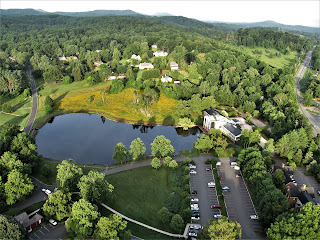
A birds-eye view of the University of Virginia (UHall seen here) in Charlottesville, Virginia, makes clear that there are plenty of native trees to be found in developed areas. 

A Charlottesville, Virginia, residential area (seen from a hot-air balloon) has so many trees that you can’t see the roadways interspersed among them. In other words, insects and birds aren’t disappearing because alien plants have replaced native trees.


ALL TEXT AND PHOTOS © Marlene A. Condon


Originally published at Conservation Sense and Nonsense on December 22, 2021


https://milliontrees.me/2021/12/22/when-ideas-remain-unexamined-and-unchallenged-they-intimidate/


The novelist E. L. Doctorow, in a 1989 conversation with PBS journalist Bill Moyers, said, “When ideas go unexamined and unchallenged for a long enough time, they become mythological and very, very powerful. They create conformity. They intimidate.”


He could have been speaking about the current environmental narrative regarding so-called invasive plants. Anyone who speaks out feels the wrath of the folks pushing their fictional environmental manifesto; I’ve lost jobs because of these people.


Most neo-scientists and -environmentalists, having arrived late to the party, have no clue as to why some alien plants exist in profusion along roadways, in former farm fields, and along trails in forests. The popular notion that native plants would otherwise be filling those areas is easily accepted by people who don’t possess knowledge of soil science, or who lack experience with gardening and/or closely observing the natural progression of plants in unmanaged, disturbed areas.


Knowing the prior history of the land is essential to understanding why particular nonnative plants fill some areas. Road building discomposes soil. Trail development/use and cows/farming-equipment moving over the land compact soil. Only “colonizer plants”—those capable of thriving under the altered and nutrient-poor conditions of these sites—can grow there.


Usually such areas, after many years, support a mix of native and nonnative pioneers, but sometimes alien plants outnumber the natives because they are best suited to the constraints imposed by the physical attributes of the site. Anyone (no Ph.D. required) can verify this statement by taking the time to observe the progression of plants in an area not revegetated by people. Doing so would make clear that alien plants do not “push out” native plants by “invading” and “taking over”, but rather, they fill disrupted areas where few native plants can successfully grow.


Yet, the desire by scientists and environmentalists is so great to get folks to remove supposedly invasive plants from the environment that we now have tall tales being spread. Herewith a sampling of some of the most egregiously untrue declarations regarding alien plants.


Johnny Randall, Director of Conservation Programs at the North Carolina Botanical Garden (University of North Carolina at Chapel Hill) wrote a New Hope [North Carolina] Audubon blog post called “Invasive Plants Are NOT for the Birds”.

https://www.newhopeaudubon.org/blog/invasive-plants-are-not-for-the-birds/


·    He writes that, “The scientific literature on invasive plants and bird-dispersal is moderate but growing, and almost all of the research warns that this is a serious and multi-layered phenomenon. First off – birds either do not discriminate between native and invasive plants or often prefer invasives over natives. One reason for this is that a large proportion of invasives are high in carbohydrates, whereas the natives are often higher in protein and lipids/fats. Birds are consequently (pardon the analogy) choosing candy bars over cheeseburgers, which could affect bird nutrition, particularly during fall migration”.


The suggestion that birds are choosing “autumn olive berries [that] are sugary sweet treats, the junk food of the bird diet” is echoed by many people. This quote, from a letter to the editor of The Crozet Gazette by Susan A. Roth, William Hamersky, and Manuel T. Lerdau, Ph.D., (https://www.crozetgazette.com/2019/03/12/to-the-editor-the-blue-ridge-naturalist-not/) is supposedly based upon a study published by the Wilson Journal of Ornithology in March, 2007, entitled “Fruit Quality and Consumption by Songbirds during Autumn Migration”.


Yet this study states that “Most common fruits on Block Island [where the study took place in Rhode Island] contained primarily carbohydrates...and little protein...and fat.” As the research paper’s authors were mainly speaking of native plants, this statement directly contradicts that of Mr. Randall that natives are often higher in proteins and fats than so-called invasives.


Additionally, the research paper’s authors state that “fruit selection by birds on Block Island was not simply related to differences in macronutrient composition between fruits...studies of wild and captive songbirds have shown that some species preferentially select high-fat fruits...or high-sugar fruits...”, which hardly implies that Autumn Olive fruits are a necessarily inferior food choice, as declared by Roth, et al.


A variety of foods exists to serve a variety of purposes. Turning sugar into something “bad” for birds comes as a result, perhaps, of this same application to human nutrition. But sugar is not in and of itself, “bad”. A runner in need of glucose who eats some jelly beans gets a quick burst of energy to continue exercising. There’s absolutely nothing wrong with that.


Sugar is only a problem if it’s eaten in excess, as might be done by children. But birds are not children; if they feel the need for protein and fat, they will search for insects and fruits that offer what they need.


·    Furthermore, Director Randall wrote that “Researchers have also shown that many invasive plants have fruits that persist longer than do native plant fruits into the fall and winter. The invasives are therefore available when our natives are not.”


In a world of disappearing habitat for wildlife because of human development, the fact that fruits on invasive plants are available when native-plant fruits are depleted should be seen as a positive rather than a negative.


·    “Recent research published by Narango et al., in the October 22, 2018, issue of the Proceedings of the National Academy of Science demonstrates that native plants are best for birds. The research showed that yards landscaped with the usual garden center plants, which are mostly nonnative ornamentals, could not support a stable population of chickadees. Yards where native plants composed at least 70 percent of the plantings were able to do so. This is because native plants host more insects than non-natives and therefore provide the necessary high-protein food that birds need to feed their chicks.” [from a letter to the editor of The Crozet Gazette by Susan A. Roth, William Hamersky, and Manuel T. Lerdau, Ph.D., https://www.crozetgazette.com/2019/03/12/to-the-editor-the-blue-ridge-naturalist-not/]


Narango’s study cannot be generalized to all birds, although many people have made the mistake of claiming it can. This study applies only to chickadees and certain other birds that inhabit forest because such species are dependent upon the native plants (trees) that comprise our forestland. In other words, if you want forest birds to reproduce in your yard, your yard must be forest. For a fuller explanation, please read “Chickadee Chicanery” at https://indefenseofnature.blogspot.com/2020/10/a-carolina-chickadeegrasps-tulip-poplar.html


·    These invasive species not only impact our forests, wetlands and streams, but also our economy, health and safety. They kill the trees that shade our homes and that our kids play hide-and-seek around. They increase the presence of other disease-spreading species like ticks. They diminish visibility along trails where safety is important. [quote from an article from the Central Ohio Partnership for Regional Invasive Species Management at a Nature Conservancy-sponsored website https://www.nature.org/en-us/about-us/where-we-work/united-states/ohio/stories-in-ohio/ohio-invasive-species/]


The only “forests” where you will see alien-plant species are those that are either managed improperly (overly thinned and thus allowing too much sunlight to reach the ground under the trees) or those that are actually “woods” in the process of succession (transforming from a field to a forest that has not yet reached maturity). “Invasive” plant species are sun-loving and therefore do not inhabit shady mature forests.


As for killing trees, if “they” refers to vines (a common complaint in the eastern U.S.) one must ask, why was the homeowner unable (or unwilling) to keep a vine from killing a tree in his yard that his “kids play hide-and-seek around”? However, if “they” refers to nonnative animals and/or diseases killing trees, that is a different situation altogether, which is not the point of this article. It’s unfortunate the writer did not make clear what “they” referred to.


As far as I can tell, there’s no proof that “invasive” plants, in general—as stated above—increase the presence of organisms such as ticks. A study published in Environmental Entomology [https://www.researchgate.net/publication/26750666_Managing_Japanese_Barberry_Ranunculales_Berberidaceae_Infestations_Reduces_Blacklegged_Tick_Acari_Ixodidae_Abundance_and_Infection_Prevalence_With_Borrelia_burgdorferi_Spirochaetales_Spirochaetaceae] purportedly shows that barberry-infested plots support more mice and thus ticks than plots in wooded areas with no barberry.


However, the “no barberry” plots were severely browsed by deer and thus “little understory vegetation was present”. In other words, these scientists compared two completely different habitats, which explains the greater number of ticks in the shrubby (Japanese Barberry) area that provided “questing habitat [for] blacklegged ticks [whereas] little other suitable vegetation exist[ed] in [the] severely browsed forests.”


“Questing habitat” refers to plants upon which ticks can wait at the appropriate height to grab onto an animal that comes by. Obviously, ticks are not going to be found in an area with little understory vegetation as they have nowhere to sit and wait for their quarry.


And we’re to believe “invasive” plants diminish visibility along trails, and native plants don’t? It sounds more like the folks who are supposed to be maintaining the trails have been derelict in their duties!


It’s clear that scientists and journalists are doing everything they can to assure that government and the general public view so-called invasive plants in a negative light. Yet, to my knowledge, no study condemning “invasive plants” exists that has the least bit of merit.


 NATURE ADVICE:


It’s important to realize that most, if not all, of the articles written against so-called invasive plants are slanted in their presentation of so-called facts. Try to think critically about what you read.


For example, “invasive” plants are often demonized by giving them attributes that apply equally well to native plants. As soon as you see someone disregarding reality, you can rest assured that their article is untrustworthy.


Friday, December 3, 2021


Knowledge of Nature Would Have Better Informed COVID-19 Pandemic Response

A White Hall, Virginia, Ruritan sign informs folks that the wearing of a mask saves lives. Unfortunately, people resist taking this common-sense advice. If they had a better comprehension of nature, this stubbornness would not occur.


ALL TEXT AND PHOTOS © Marlene A. Condon


Today, fear has found its way to the front of the queue as a driver of mental distress and trauma”, Dr Claire Weekes, Australian physician (1903-1990).


The scientific and political reactions to the discovery of a novel virus—COVID-19—among us confirmed a deeply disturbing reality: Many scientists in the biological sciences nowadays seem rather unfamiliar with the workings of the natural world, which leads to illogical reasoning and bad advice that politicians blindly follow instead of first critically assessing.


Our government officials initially shut down our country—an action taken out of fear—that caused much distress and trauma to its citizenry. They closed “nonessential” businesses and demanded that those staying open sanitize all surfaces before allowing customers inside.


Neither health scientists nor the government officials who listened to them (two public-sector groups who enjoy job security) took into account that no business is “nonessential” to those making a living from it, nor that sanitation of surfaces to prevent illness is a complete waste of time and effort other than in limited and confined areas, such as inside hospitals and nursing homes.


It's irrational to think you can disinfect the world; we’re surrounded by uncountable numbers of microorganisms 24/7 and billions of people capable of redistributing them. Nevertheless, out of an “abundance of caution” (the fear of a highly unlikely catastrophic outcome that those in the medical profession didn’t want to risk getting blamed for), the practice of wiping down store shelves and the goods on them after the pandemic began was demanded despite the impossibility of achieving long-term disinfection. Employee time and effort were squandered on a senseless mandate.


Virologists (those who study viruses) should have known that a virus, though genetically simple, is comparable to living organisms. (After all, viruses have been seriously studied for over a century.) And, similarly to all lifeforms, a virus requires an environment that meets its specific needs in order to thrive.  Outside of that setting, its existence is necessarily limited, a fact that comprises a basic biological concept.


For COVID, its indispensable environment is the human body, and the only rational approach to maintaining public health would have been for government to inform folks that each independently functioning individual (i.e., not dependent upon caregivers) would need to take responsibility for his own wellbeing. To effect change in human behavior, especially in unfamiliar circumstances, such as this pandemic, knowledge and understanding are imperative.


Therefore, public-service announcements (PSAs) could have explained that handwashing removes germs and thus is an important step to take before touching your eyes, nose, or mouth after being in a public space where the COVID virus could be circulating. PSAs could have spelled out that the wearing of a mask serves as a physical barrier to these viruses within the air, and social distancing helps to prevent these airborne germs from reaching you from an infected person.


But, because analytical thought didn’t prevail among those in charge, many businesses ended up closing permanently as a result of foolish mandates and many people lost their jobs as a result. To assist citizens harmed by its poor advice, government ended up printing money to send to them. When ill-conceived actions are taken without first skillfully evaluating them, astronomical costs can be incurred.


The only thing the government got right was to get vaccines out to the public as safely and quickly as possible because getting vaccinated is the ultimate defense against becoming severely ill. Yet, large numbers of people are refusing to participate in these measures that, in addition to protecting their own health, have a high probability of successfully bringing the pandemic to a halt—which points up another sober shortcoming in society today.


Folks have become so out of touch with nature that they no longer grasp straightforward biological realities. If they did, they would comprehend that if everyone were vaccinated, the COVID virus would have difficulty finding an hospitable environment (a human body) in which to replicate itself, and without reproduction, this threat cannot be perpetuated.


I’ve spent my life immersed in the natural world. Understanding how it works guides me well in my everyday life and informs me of nonsensical news stories and misguided decisions made by government. If everyone possessed a wide-ranging comprehension of nature—which they absolutely should because our lives unfold within its realm—we would suffer from far fewer clueless decisions.


To deal with any natural phenomenon (such as viruses), it’s crucial to understand nature and how it works. Unfortunately, nowadays, too few people do.


NATURE ADVICE:


Show me a person who fears the natural world and I’ll show you a person who doesn’t know much about it. The antidote to fear is knowledge, so if you’re afraid of any aspect of nature, do your best to learn as much as you can about what frightens you. You’ll be amazed by the effectiveness of this strategy.


Friday, November 5, 2021


The Home Garden: A Primer in Dysfunction

Pillbugs (also known as Roly-poly Bugs or Woodlice), are often found underneath flower pots. They are not insects, but rather, land crustaceans. Their function in the environment is to help recycle dead plant and animal matter, which is why you see them in association with planter pots. Yet, extension offices often refer to them as “pests” and tell gardeners to get rid of them! Ignorance of the true roles of our fellow life forms endangers the proper functioning of the environment that supports all of us.


ALL TEXT AND PHOTOS © Marlene A. Condon


From 2002-2014, I gave monthly talks each summer in Shenandoah National Park. Most of the questions after each talk were from gardeners wanting to know how to prevent the trouble they encountered with this animal or that one.


At first this situation puzzled me. I’d gardened throughout my adult life and never encountered these many problems. I puzzled over it following each presentation, until I realized people had these difficulties because they ignored the fact that their gardens exist in the natural world. Thus, you have no choice but to follow natural laws, as I had always done.


Unfortunately, folks don’t like that answer. They want to continue doing their gardening in whatever manner they please, as if the natural world is going to bend to their will. Except it won’t. And therein lies the reason gardeners who ignore my philosophy (as they would see it; I see it as presenting a fact of life) are doomed to rant forevermore about various kinds of wildlife that are problematic for them.


So, let’s look at just a few of the “truisms” in gardening lore that not only make unnecessary work for the gardener, but are also detrimental to wildlife and the environment.


As summer draws to a close and fall arrives, gardening experts issue the same axiom year after year: Clean up your garden to keep pest problems at a minimum. However, if you have a yard that’s wildlife friendly, this task is totally unnecessary. It deprives many organisms of needed winter food and cover, and over time, bankrupts the soil nutrition available for growing plants.


While it’s true that some insects overwinter as adults or eggs in plant stalks, it’s also true that many animals will find these insects and eat them. Wrens and woodpeckers will come to bird feeders to get sunflower seeds, but they mainly subsist upon insects all the year around. They can be in big trouble if we have a harsh winter with lots of snow. But, if you leave plants standing, especially tall ones, these birds gain a better chance of surviving because they may find insects or their eggs on the stems rising above snow level.


Deer Mice also eat insects. While you probably care more about birds than these mammals—thinking all rodents are “pests”—consider that mice help to replant our forests and grasslands. They are Mother Nature’s gardeners, carrying seeds back to their nests and dropping some along the way that may then grow where they fell.


It’s easy to overlook the fact that every creature does its part to keep the other parts of the ecosystem functioning properly, but humans need to recognize this actuality. Even though you don’t want mice in your house, you should certainly welcome them outdoors, and not only because they are inadvertent gardeners. Mice are a prime food source for owls, foxes, and coyotes.


A gardening myth is that you must keep your plants totally “bug-free” to keep them healthy. Healthy plants can withstand a few insects chewing or sucking on them. Remember, plants exist to feed animals (“Marlene’s Axiom”). There’s no need to run for insecticide at the first sign of a few six-legged critters, especially as many of these insects will be eaten if you’ve created a yard that welcomes predators.


For example, many gardeners worry about aphids, yet they are unlikely to cause significant damage in a yard full of birds. Hummingbirds, especially, require such tiny insects to obtain protein and fat for good health. Remove aphids and you remove a significant food source for these energetic creatures.


You’ve probably also heard that you shouldn’t allow your plants to go to seed. According to Penn State Extension: “When dead blooms are left clinging to flowering plants, they sap the nutrition and strength from the core of the plants and rob them of the energy to produce new and colorful blooms.”


https://extension.psu.edu/to-deadhead-or-not-your-final-answer-is


Nonsense! A plant’s ultimate “goal” is to reproduce, so it’s well adapted to making seeds and continuing to bloom (if in its DNA) and grow each year. Spend time deadheading (removing all “spent” blooms) and you perform busywork that deprives your local wildlife of seeds.


Lastly, anywhere you plan to cover bare ground with mulch, you should instead let some “weeds” grow. They serve as your natural mulch. Rather than stealing water, they keep the ground shaded to prevent moisture loss, and many turn into lovely flowers that provide beauty for the gardener, nectar for hummingbirds, butterflies, and/or numerous other kinds of insects, and possibly seeds for birds and small mammals when left standing throughout fall and winter.


Save time and energy by gardening in a more relaxed manner, and you’ll help our wildlife while you’re at it. Your reward will be the opportunity to watch nature at work instead of you!


 NATURE ADVICE:


Instead of taking away the fallen leaves of woody plants, you really should rake them around the main stem and out to the limit of the plant’s branches. Shrubs and trees provide their own mulch free of charge. The leaves they drop are Mother Nature’s way of returning “borrowed” nutrients to the soil (when the leaves decompose) from which they came.


If you prefer the look of woody mulch, keep the spent leaves and just place the woody mulch over them. But remember: The woody mulch needs to decompose (all organic matter is supposed to be recycled in nature), so if you see mushrooms or other kinds of fungi growing upon the mulch, leave them be! They won’t be visible long, and these decomposers are doing their job of returning nutrients to the soil so you don’t need to spend money, time, and effort fertilizing your growing plants.

Monday, September 27, 2021


Fighting A Losing Battle against Lawns, Pesticides, Lights, and Attitudes towards Plants and Wildlife

Even as the grass was turning brown (going dormant) and not growing due to a severe drought this past summer, the mowing needlessly continued along my road.


ALL TEXT AND PHOTOS © Marlene A. Condon


When I left the house in pre-dawn darkness this morning to exercise, I expected a pleasant, peaceful walk, with the only sounds being that of birds singing and chirping as they awoke. But no, despite the very early hour, what should come roaring up behind me on the roadway but three huge riding lawn mowers, moving from one section of a large property to another. They were still mowing when I returned more than an hour later!


Unfortunately, I don’t live far from some extremely wealthy people, all of whom maintain huge amounts of lawn. They mow every single week, regardless of whether the grass even needs it—such as during this recently past summer, when my area suffered the worst drought I’ve lived through in the 45 years I’ve resided in Virginia. The mowing didn’t stop taking place until the overly short grass turned completely brown and was obviously not growing.


Compounding the impact of all this mowing is the fact that the less well-off living nearby feel required to mow their own lawns lest they be viewed as socially inferior if they don’t follow the example set for them by the well-heeled. As a result, every house with a lawn along the entire length of my road gets mowed within the span of the same few days.


Maintaining a lawn doesn’t contribute to the wellbeing of wildlife. The act of mowing kills animals as it chops anything to bits that gets caught in the blades. Mowing cuts “weed” flower heads, such as dandelions and clovers, immediately depriving pollinators of a source of food. Pesticides are expressly employed for killing organisms living there. And, of course, the air and water pollution as a result of running a small engine impacts humans as well as wildlife.


This scenario is repeated over and over throughout the country. Consequently, I’ve come to the conclusion that we will never be able to save the natural world because so many folks continue to maintain an excessive amount of lawn, even in this time of “enlightenment”.


Radio and television gardening shows, and gardening columns and books, all exhort people to do away with as much lawn as possible, yet I see no real movement in this direction. Over the past few decades, an increase in the acreage devoted to lawns and the necessary mowing to maintain them has become more widespread, in fact.


Adding to my despair is the incredible amount of pesticide usage, not only included in lawn and garden maintenance, but also inside people’s homes. Neighborhood blogs make appallingly clear how often pest control companies are being called by homeowners.


If the “problem” is insect-related, you can rest assured poisonous chemicals are going to be employed, often both inside and out. If the “problem” is a mammal or reptile simply visiting the premises or trying to reproduce there, pest control folks will trap and kill it (it’s against the law in Virginia and many states to relocate wild animals), although these companies often tell folks they are not going to dispatch the animals.


Then there are the unnecessary lights. Lamp fixtures burn 24/7 outside numerous homes and barns, not only in my local area but anywhere I travel. Parking lots and buildings are often so illuminated at night that it seems to be daytime.


There is no doubt in my mind that the ubiquitous amount of lighting in society is responsible for the dearth of moths and thus the dearth of caterpillars (there are far more species of moths than butterflies). Moths are supposed to be mating at night, but instead they are attracted to, and hang around, all the lights out there.


When moths don’t procreate, they don’t produce caterpillars, which in turn results in fewer moths. It’s a vicious circle that has been going around for so long that moths are practically nonexistent these days. No amount of native-plant landscaping is going to bring back animals driven to near-extinction by lighting that, rather than diminishing, is increasing along with development.


Lastly, and maybe most importantly, the negative attitude of most people towards wildlife is hard to change. Far too much of the populace has become completely intolerant of having wildlife anywhere near where they live, perhaps because ignorance breeds fear, and nowadays few folks have any real understanding of and connection to wildlife. They’ve grown up in a bubble full of people and sanitized surroundings where wildlife is demonized.


The lack of knowledge of our natural world even extends to plants, which ends up adding yet more pesticides to the environment and taking away yet more habitat from wildlife as people get rid of what they see as undesirable plants.


An entire mythology has been created about so-called invasive plants. The resultant zeal to remove them is yet one more assault upon the environment that harms wildlife. Whether it’s spraying poisons upon plants or cutting them down (or often, both), habitat is destroyed. It’s beyond my comprehension how anyone can see these actions as beneficial to our natural world.


I can only conclude that I have been basically fighting a losing battle. After expending much time and effort over the past 28-plus years to get folks to better understand nature, I’m losing heart. However, I am not totally giving up (yet!). I’m working on two books I’d like to see published, and I need time to work further on that front.


Therefore, I plan to start posting once a month instead of every two weeks. This post serves as the commentary for the month of October. After that, I’ll post on the first Saturday of each month.


 NATURE ADVICE:


If you care about the natural world and haven't been “activating”, as I like to say, please start. Far too often, I’ve been a lone voice for the natural world, and that just doesn’t cut it.


Politicians and people in charge of natural areas don’t listen to a lone voice in the wilderness; they do listen when many voices speak as one. That’s the very reason the “invasive” plant folks have been able to infiltrate government and local neighborhoods. They’ve gathered a crowd of like-minded cohorts to spread their mythology far and wide, which gives it a semblance of credibility it doesn’t deserve.


I hope many of you will take up, or continue, the good fight. It’s vitally important not only for the natural world, but also for the benefit of mankind.


Monday, September 13, 2021

You Reap What You Sow—Pesticide Usage Guarantees Collateral Damage


This Ortho ad hanging in front of its product line at a store could not have made any clearer the attempt to persuade an unknowing public to unnecessarily use poison on an insect that would only be around for a limited period of time.


ALL TEXT AND PHOTOS © Marlene A. Condon


Almost 60 years ago, Rachel Carson’s book, Silent Spring, was published. Warning us of the danger pesticides posed to wildlife, especially birds, it impacted people’s feelings towards these products that are meant for only one purpose: to put an end to life. For some time afterwards, neither environmental activists nor people who cared about nature would employ pesticides in the landscape.


But, just as the effort back then to get society to view women as equal counterparts to men, rather than as sex objects, has somehow backfired (today’s women and teenaged girls routinely dress in clothing that brings sex to mind), so too has Ms. Carson’s admonition about pesticides been turned on its head.


Today, people treat these poisons as innocuous substances. Pesticides line shelves in stores for homeowners and gardeners to employ as they see fit (although this retail practice should be discontinued).


Thus, in the spring of 2021, when humongous numbers of periodical cicadas emerged in several areas of the Mid-Atlantic and Midwestern states, it’s quite possible that many people may have decided they should employ pesticides, even though these other-worldly insects would only be around for 3-4 weeks, at most. (They exit the ground to mate so females can lay fertilized eggs in twigs to start the cycle of life all over again; then all the adults die.)


And from May to the end of July, juvenile songbirds in the Mid-Atlantic and all the way to the Midwest became ill and died.


https://www.scientificamerican.com/article/suspect-list-narrows-in-mysterious-bird-die-off/


Although no agency is saying it has determined the cause to be pesticides (or anything else, for that matter), there are many factors pointing strongly towards that conclusion.


·    Ortho has blatantly advertised one of its more potent insect-killing brands precisely for the killing of periodical cicadas (see photo).


·    Most of the affected birds were fledglings (they’d only recently left the nest) of species likely to eat large cicadas: Common Grackles, Blue Jays, American Robins, and European Starlings. Young, inexperienced birds would be more likely to make a meal of the abundant and easily caught insects.


·    Pesticides affect neurological function, such as the seizures exhibited by dying birds.


·    The fact that bird deaths precisely coincided with the time-frame of the periodical cicada emergence, and has subsided with the end of this event, is highly unlikely to be mere coincidence.


You reap what you sow—pesticide usage guarantees collateral damage. If the insects were poisoned, birds eating them would also suffer the effects of these chemicals. (Yes, it’s cruel to employ pesticides for insects, as if they are somehow not worthy of a humane death.)


On neighborhood blogs, people exhibit little patience with wildlife, especially insects that they’ve been led to believe can be very dangerous to them or their plants. Not having much knowledge of periodical cicadas (most people nowadays know far too little about wildlife), folks may have feared the great numbers of these insects would destroy their plantings (ignorance is a prime instigator of apprehension).


In this age of the Internet, too many faux “experts” effortlessly spread misinformation far and wide. Those working in the gardening industry are perhaps the lead offenders in this regard, telling people these insects will kill the branch tips of small trees and thus “harm” them. But this notion is wrong.


Plants exist to support animal life, which they can do quite successfully if their local environment is functioning properly. In other words, when predator/prey relationships are in balance, insects and other forms of life do not overwhelm plants with their presence, which is why everyone should create nature-friendly gardens. Sure, critters may injure plants, but not enough to cause serious harm. Plants are extremely resilient and bounce back from a bit of loss; otherwise, life would not persist as it has for eons.


Now, you may not like to see dead branchlets on your tree, but within a year, your tree will be flush with new growth while many of the lifeless branchlets will have fallen to the ground. As most birds require those twigs for nest building, periodical cicadas obviously help provide them with the “lumber” they need.


This incident should make abundantly clear to folks the havoc they are wreaking upon this planet with pesticides. Our wildlife is struggling to survive, as we certainly will if we don’t wake up and recognize how much we depend upon wildlife for our own welfare. People must learn to live in agreement with nature instead of fighting it at every turn. And they must learn this lesson much sooner rather than later.


NATURE ADVICE:


When someone talks about doing right by the environment these days, it’s virtually guaranteed they will bring up so-called invasive plants that need to be gotten rid of. And how is that often accomplished? By employing pesticides.


You can rest assured that even though there may not be many (yes, there are some) species of insects that feed upon the leaves of alien plants, many kinds of critters make use of these plants. An overlooked aspect of “invasive” plants is that they do provide structure. Structure is a necessary component of a nature-friendly garden as it affords animals of many kinds a place to hide from predators, to rest a bit, or to build a nest (think web-weaving spiders). No one looks for these animals before spraying with deadly chemicals that will kill them, and no one would be able to locate all of them anyway.


Pesticides are meant to kill, and they do. No one needs to use chemicals that bring further harm to our environment on a home property or in what’s supposed to be a natural area.

  Condon’s Corner Feed the Birds, But Educate Yourself First © Marlene A. Condon   2026 All Rights Reserved Suet blocks help a variety o...